
NATIONAL INDUSTRIALIZATION POLICY DEVELOPMENT HIGHLIGHTS
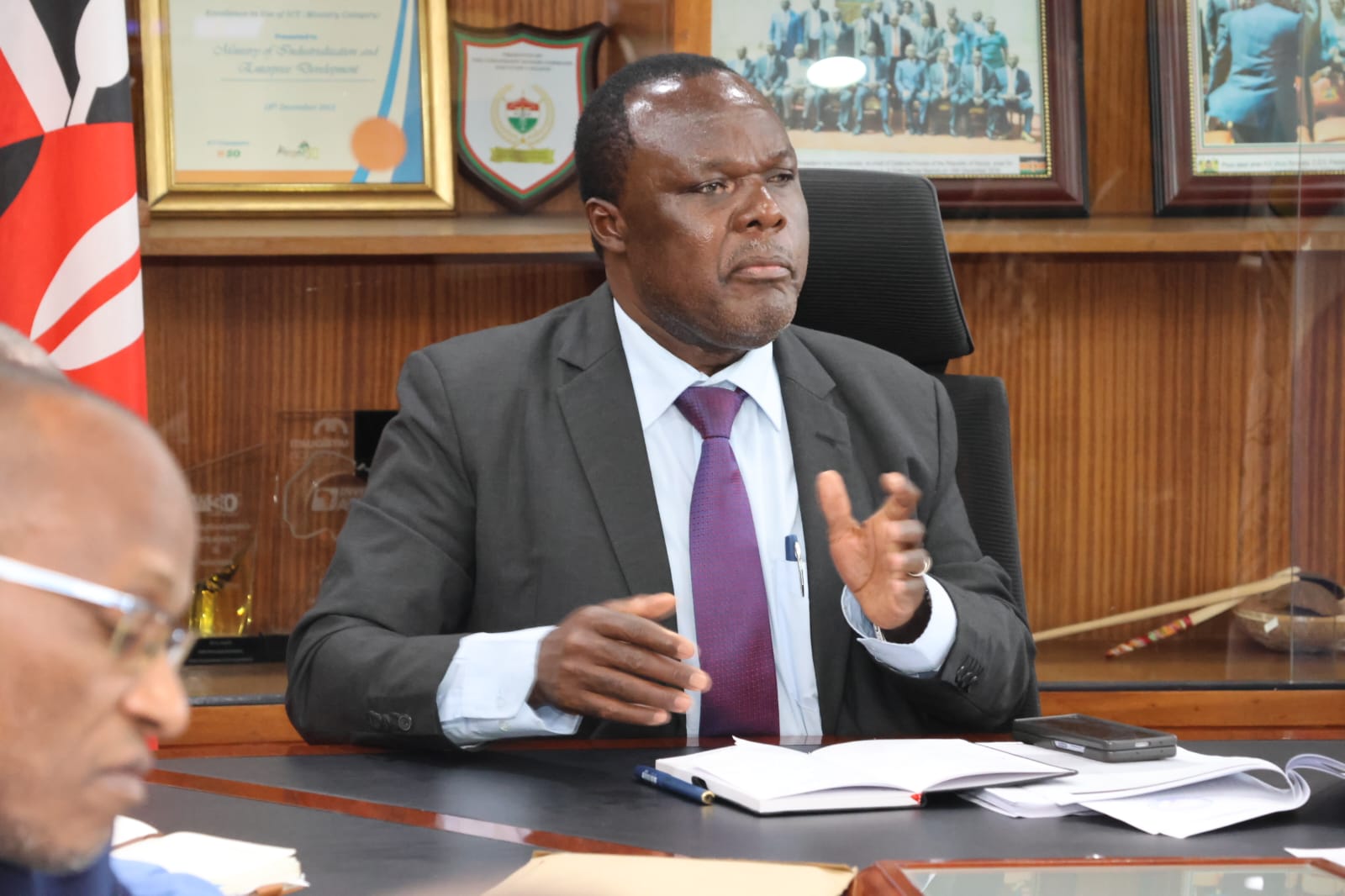
Industry Principal Secretary Dr. Juma Mukhwana, CBS, today held a consultative meeting with the National Industrialization Policy Review team led by Aftritrade Consultant group Team Lead Dr. Caroline Saroni to review progress on the ongoing policy review process.
The team briefed the PS on emerging findings aimed at repositioning Kenya's industrial sector for competitiveness, job creation and inclusive growth.
During the meeting, Dr. Mukhwana underscored the need to leverage idle public assets to catalyze industrialization. He noted that industrial infrastructure and institutions in the country hold massive tracts of underutilized land that could be consolidated into a national land bank.
"We need a land bank that can be consolidated and redirected to production of raw materials for our industries. These institutions can not only have land for development of industrial facilities but also grow volumes of agricultural produce as raw materials for our industries," the PS said.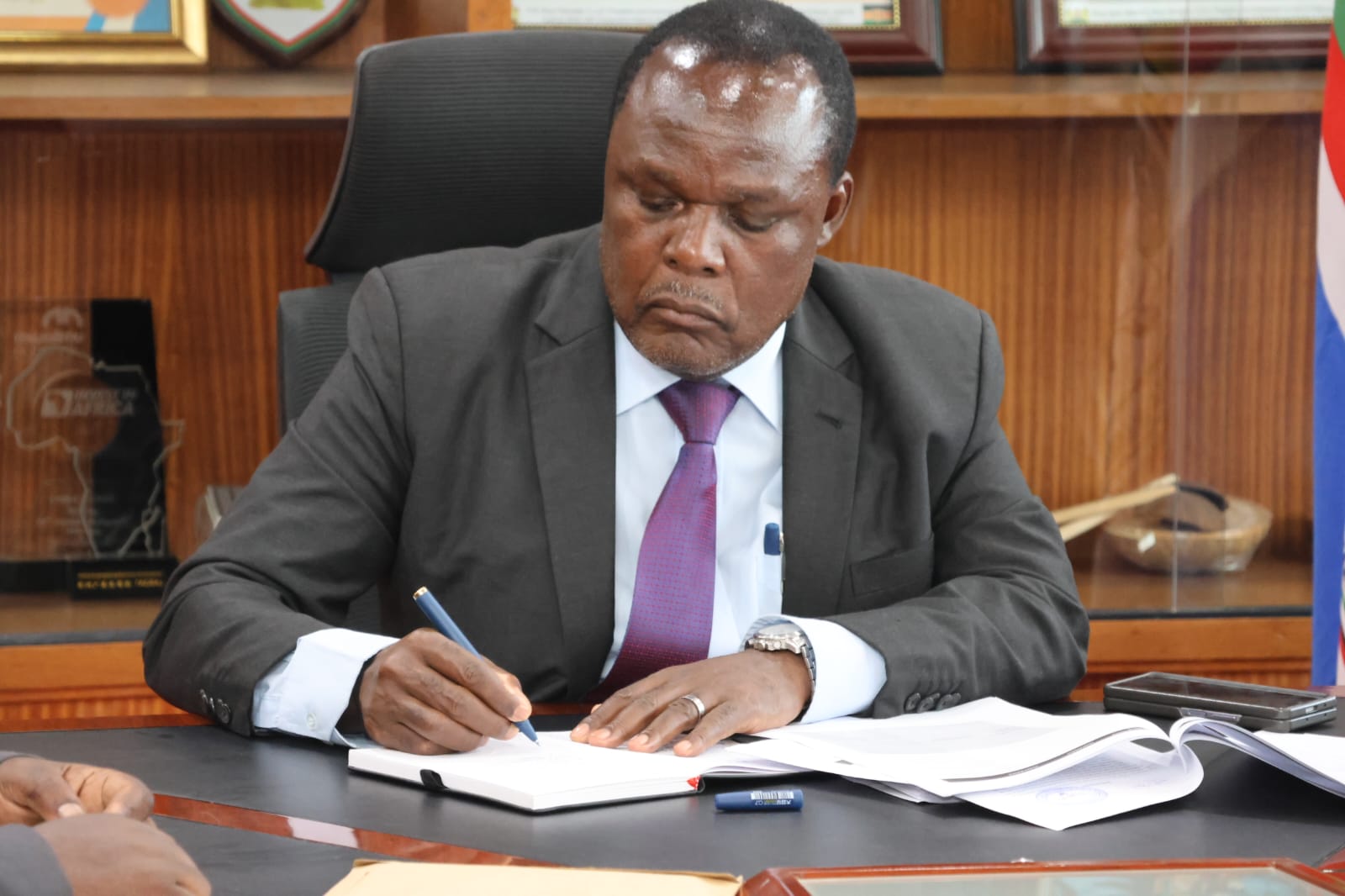
He cautioned against developing infrastructure that does not generate returns for taxpayers, stating, "We can't build infrastructure that can't pay us back. It is not fair for Kenyans."
Dr. Mukhwana challenged the review team to consider mechanisms for igniting industrial growth at the county level, including establishment of a County Industrial Competitiveness Index to rank counties that are creating more opportunities for manufacturing and factory development.
He emphasized the need for Kenya to refocus beyond agro-processing to high-value sectors.
"If we have to be ahead of everyone, we need to refocus beyond agro industries. Pharmaceuticals, automobiles, electronics and pharmaceuticals remain massive opportunities for Kenya," he said.
On innovation, the PS raised concern over low commercialization of inventions, noting that less than 5% of ideas registered at the Kenya Industrial Property Institute (KIPI) are commercialized, with many viable products failing to reach the market.
The insights that will inform the final policy draft are geared towards accelerating rural industrialization, strengthening local value chains and positioning Kenya as a regional manufacturing hub.
The review of the National Industrialization Policy is expected to provide a roadmap for the implementation of the Bottom-Up Economic Transformation Agenda (BETA) manufacturing pillar.
The envisaged National Industrialization Policy (NIP) targets 15% growth per year, with manufacturing contributing 24% share of GDP by 2063, while providing decent jobs in an inclusive and sustainable manner.
The implementation of the NIP stresses the importance of coordination and accountability, with a sharp focus on competitiveness, producing things that the market demands.
The envisaged Policy will address challenges in firm capabilities, information asymmetry, noting that information is a public good and intermediation of financing gaps for manufacturing ventures.
Currently, manufactured goods account for 59.5% share of exports, with textiles and apparel taking the highest share. This calls for urgent diversification of the export basket.
The team noted that digitization and adoption of new technologies remains slow despite Kenya being a tech-savvy nation.
However, significant opportunities remain to increase manufacturing share by leveraging the AfCFTA market, mproved infrastructure, use of renewable energy, and stabilization of fiscal policy.
There is need for coordinated efforts towards bringing down the cost of energy and strengthening industrial technology and commercialization.