

Kenya Rallies Investors ahead of Western Region CAIPs Conference
The County Aggregation and Industrial Parks (CAIPs) are strategically placed to transform the country’s economy from the grassroots, creating employment and enriching farmers.
Investment, Trade and Industry CS, Lee Kinyanjui, has noted that the transformative potential that the CAIPs poised for the economy, was enormous, urging the Counties to take advantage of the opportunity and rally residents to invest in them.
"The National and County Governments have pooled Shs.500 million towards the development of these CAIPs in each County. This is the first time we are seeing such dedicated focus on counties and rural areas, as the government actualizes its Bottom-up Economic Transformational Agenda,” Kinyanjui noted adding that the industrialization will serve to retain knowledge, expertise, and production at the grassroots.
CS Kinyanjui decried the country’s continued reliance on imports, noting that Africa’s population that accounted for 19% of the global population was not commensurate to its 2% contribution to the world Gross Domestic Product (GDP).
“This is a clear indicator of missed opportunities in local manufacturing. We have a lot of wastage that if only tapped will bridge the huge poverty gap and unemployment that we cry about,” he posed, challenging processors of edible oils to rethink their sources of raw materials.
The CS presided over a strategic breakfast meeting ahead of the Western Region CAIPS Conference slated for later this year. The event brought together key national and county leaders, development partners, private sector players, and farmer organizations. In attendance were Governors Fernandes Barasa (Kakamega) and Dr. Paul Otuoma (Busia), alongside Principal Secretaries Dr. Juma Mukhwana (Industry) and Hassan Abubakar (Investment).
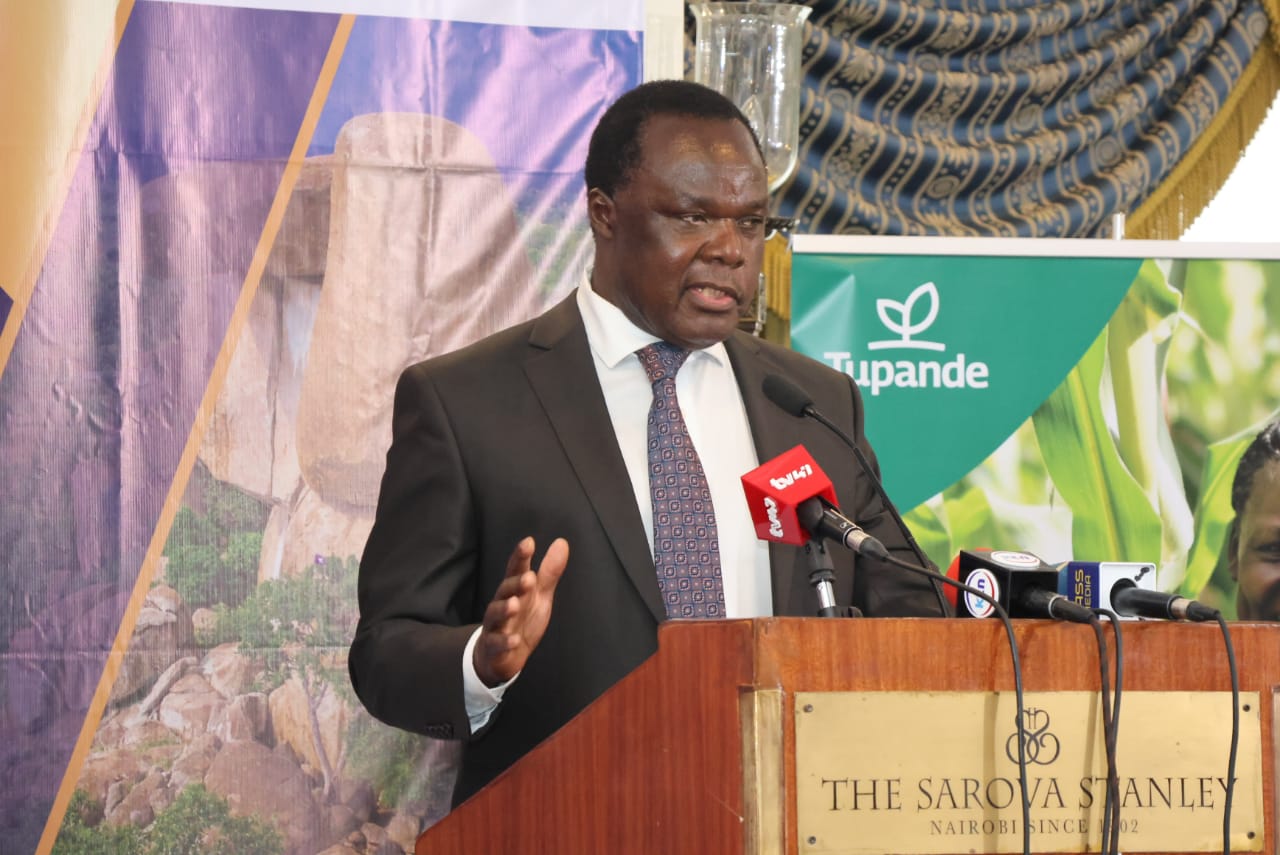
Industry PS, Dr. Mukhwana, highlighted that CAIPs were meant to promote value addition, reduce post-harvest losses, and localize manufacturing. He confirmed that 18 CAIPs are underway in Phase One, with 13 set for completion by June 30, 2025.
“We are demystifying industrialization from the previous mindset of foreign investment, to a model where our investors only need to bring their raw materials; do the processing; get access to refrigeration, and other utilities, then walk away with the finished product to the market,” he remarked.
Governors Barasa and Otuoma emphasized the Western region's untapped agricultural potential, noting that it was time for locals to exploit other crops beyond the traditional sugarcane crop.
“Nearly everything grows in Western Kenya, but we haven’t exploited this. We are now looking into growing over 40,000 acres of cotton in Busia. Already, the 1,000 acre complex in Naseo is evidence enough that the County is ready for investment, beyond the CAIP,” noted Governor Otuoma.
Investment PS Hassan Abubakar noted that CAIPs were being aligned with warehousing receipt systems to ease access to financing. This supported by policy reforms including a County Licensing Act and a County Competitive Index, were a way of spurring investment and preparing the counties for operationalization of the CAIPs.
KDC Managing Director, Norah Ratemo, added that concessional loans and de-risking mechanisms were being developed to support cooperatives, farmers, and manufacturers investing in CAIPs.

CEO of One Acre Fund, John Clark, shared their ongoing support for over 1.2 million smallholder farmers and their plans to expand into Western Kenya with certified fruit seedlings and agro-processing hubs for crops like avocado, banana, mango, and macadamia.
“We realize that for the CAIPs to succeed, we need to heavily pool raw materials for sustainable production. Our vision is to offer this linkage, standardize and add value to their raw produce, enabling smallholder farmers to tap into premium prices offered in global markets,” he said.
Stakeholders from the private sector, including representatives from Kenya Association of Manufacturers-KAM, Kenya Private Sector Aliance - KEPSA, Kenya Industrial Estate- KIE and Agricultural Sector Networks -ASNET, echoed the need for better infrastructure, access to affordable energy, and improved financing.
The stakeholders also felt the need to liberalizing the energy sector, investing in green power solutions, and offering tax incentives to investors, as a way of reducing the now high cost of production.
These, backed up by strong policy backing and cross-sectoral collaboration, they said will catalyze sustainable development, reduce imports, and create thousands of jobs across the counties.